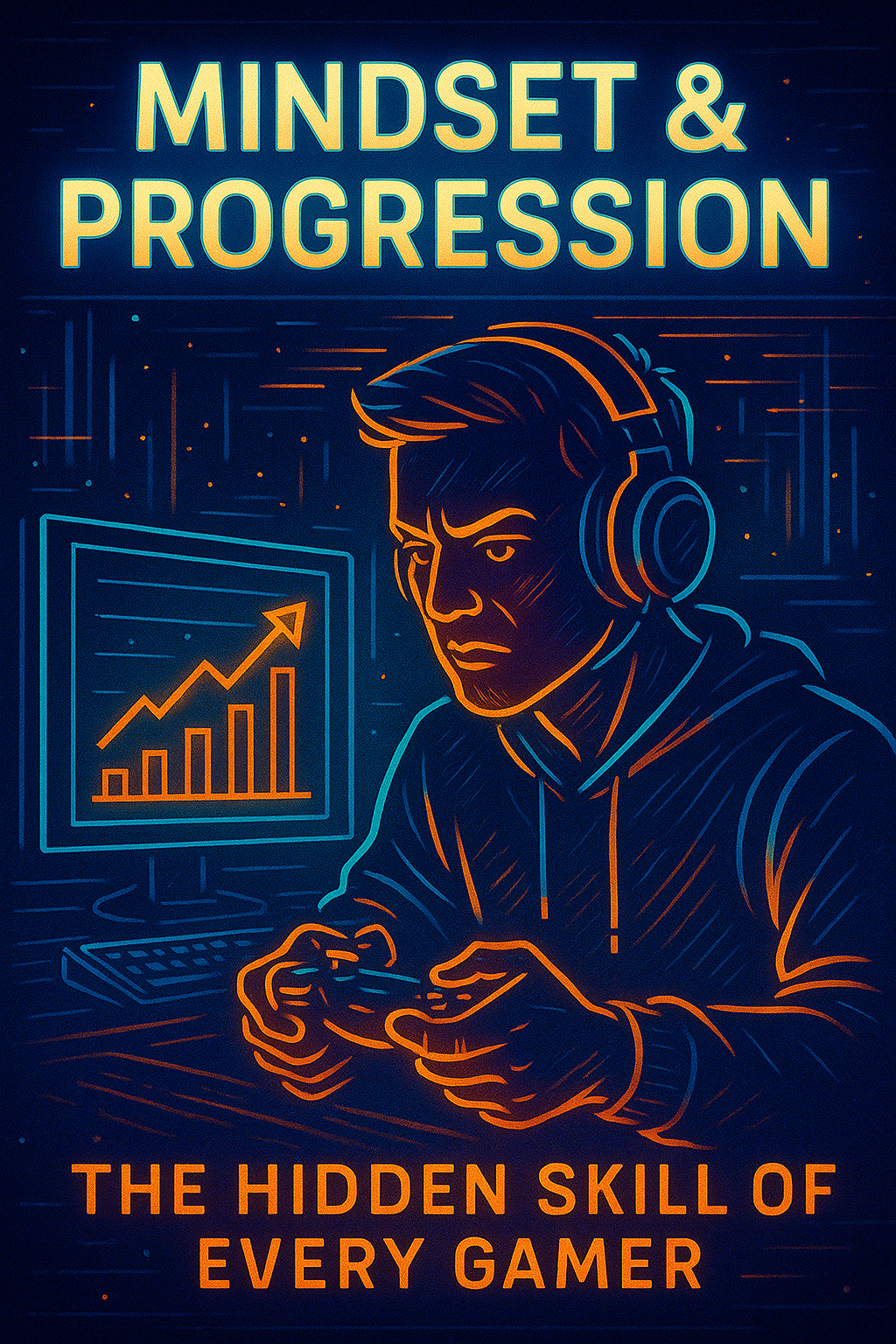
Everyone talks about mechanics, aim and APM. But in today’s competitive scene, the players who climb the fastest are not always the ones with the best reflexes—they’re the ones with the strongest mindset. Mindset turns matches into lessons, frustration into data, and practice into real progression.
Awareness: the first real power-up
Progress starts the moment a player stops blaming luck, teammates or matchmaking and begins asking a different question: “What could I have done better?” That shift from blaming to learning is a massive upgrade. Instead of seeing losses as proof of failure, top players treat them as instant feedback on their decision-making, positioning and game knowledge.
Reviewing replays, identifying patterns in defeats, and noticing recurring mistakes builds self-awareness. With awareness, every game—win or loss—adds experience points to the player, not just to the account.
Consistency beats endless grinding
Many gamers still believe that “more hours = more skill.” In reality, unfocused grinding often leads to autopilot, bad habits and burnout. Strong players don’t just play more; they play more intentionally.
Short, focused sessions where you work on a specific skill—like map awareness, economy management or communication—create better results than mindless marathons. Consistency matters: a little bit of targeted practice every day beats one huge, tilted session once a week.
Goal-driven practice makes improvement predictable
Random queues create random results. Goal-driven players enter games with a clear focus:
- “This session I will track cooldowns and ultimates more carefully.”
- “Today I will practice my early-game decision-making.”
- “If I feel tilted, I will stop queuing ranked and switch to practice mode.”
With concrete objectives, it becomes easier to know if a session was productive. Improvement stops being a mystery and starts to feel like a process you can control.
How mindset influences mechanics
Mechanics don’t exist in a vacuum. They are deeply tied to the player’s mental state:
- Confidence affects aim and reaction time.
- Calm focus improves timing and execution.
- Stress and anxiety cause tunnel vision and misplays.
- Frustration leads to rushed decisions and over-aggression.
Training mindset—breathing, reframing mistakes, staying patient—stabilizes performance. You don’t just become “good when things go well”; you become reliable, even when the game is chaotic.
Why guidance speeds up progression
Trying to fix everything alone can be slow and demotivating. That’s where structured coaching changes the game. On Loading Skills, players work with mentors who already understand the path from low-rank frustration to high-rank consistency.
Coaches help students spot blind spots, build realistic goals, organize practice time and keep their mindset in check. Instead of guessing what to improve next, players get a clear roadmap—and someone walking the path with them.
Final thought: winning the mental match
Climbing isn’t only about meta shifts, balance patches or reaction speed. It’s about how you think when you queue, how you react when things go wrong, and how you choose to learn from every match.
When you treat mindset as a core skill—just like mechanics—you stop feeling stuck and start seeing progress everywhere: in your decisions, in your calm under pressure, and yes, in your rank. That is the hidden skill of every gamer who refuses to stay on the same level.
Keywords: gaming mindset, progression, improvement, competitive games, coaching, ranked climb, mental performance.